

Listen to the Podcast:
In this episode, I discuss the no budget way to build an emergency/opportunity fund.
Paying yourself first can be hard because you have to take some of your spending money and put it aside. But what if you took some of your saving money ad put it aside to spend instead? I know this is a hair splitting distinction, but sometimes that is all it takes. In this episode Kim Butler and I discuss the easy way to start building your emergency/opportunity fund at a prodigious rate with a simple flip of the narrative and the flow.
Show Notes
Get Kim's PDF resource
My Money Tracker Spreadsheet
Recommended Books (Amazon Affiliate Links)
The Richest Man in Babylon
Key Ideas
Traditional budgets often fail for teachers because life happens.
You can build a $10,000 emergency fund with confidence using the reservoir method.
Savings are to pursue opportunities, not just retirement
You might want to rethink retirement and to find purpose beyond age 65
Bonus Tip
Here is a bonus tip I didn't get to in the episode.
While budgeting isn’t necessarily necessary for this method, I still recommend it. A budget is you telling your money where to go. And the better you get at it, the more money you have for your emergency/opportunity fund. You can start with this method, but don’t end there!
Transcript
Shaun Morgan
Welcome to the teacher money show, the podcast dedicated to helping teachers navigate your unique financial challenges and unlock your financial superpowers. I'm your host, Shaun Morgan, a full-time educator and personal financial coach and speaker. And I'm here to help every teacher, whether you're a seasoned teacher looking for fresh insights or a new educator navigating your first paycheck to have a richer wallet, classroom and life.
Shaun Morgan
I'm super excited to have Kim Butler on the show today. Kim is a long time over 30. Here's financial strategist who has helped people with their money to get it right, and we're just going to dive into how you can get your money right, just using some very basic strategies that are not going to be overly stressful or overly difficult today. Kim, welcome to the show.
Kim Butler
Thank you, Shaun. This is a joy to do, and I'll tell you why in a little bit, but we'll just speak the thank you there.
Shaun Morgan
This is a joy. You'll have to wait until the end of the episode to find out why it's a joy. We'll keep that as a little cliffhanger. We're talking specifically about this idea of building wealth, but maybe not having to worry so much about budgeting along the way. Now, I am a big fan of budgeting. I think that budgeting is something that's worthwhile, but it's also one of the hardest human habits to maintain, lot like dieting. So anything that we can use to make it happen automatically is very powerful. So that's kind of what we're talking about. So budgets often fail. Why do you think that budgets often fail?
Kim Butler
Well, it's because of our human lives. And there's a couple factual things, and then there's a ton of psychological and emotional things. So the couple factual things are that we typically get paid. And I know teachers pay pace is a little different sometimes, but most of America gets paid 26 times a year. But we only pay our bills 24 times a year, except for the few odd things, like if we owe a little more for taxes, or maybe our property taxes aren't taken out with our mortgage, or maybe we need to move apartments so we've got first and last month's rent or things like that. So we have a disconnect in the pace. That's problem number one. That's a factual problem. And then for some of your teachers... As they get into the higher incomes, they might get over the social security threshold of 185,000, I think this year, or maybe they're past their 403B contributions. So they get into the latter part of the calendar year, the maybe October, November, December space, and they actually have extra money. And because it goes into their checking account, it gets lost.
Shaun Morgan
Things get lost in your checking account. So we got to fix that. Yes. All right. So what's the first step to fixing that?
Kim Butler
Very specific first step, which is do not deposit your paycheck into your regular bill paying account. Do not deposit your paycheck into your regular bill paying account.
Shaun Morgan
So where do you deposit it then? Do you cash a check and throw it in a piggy bank? What are we doing with this money?
Kim Butler
Let's go back to the old envelopes, right, that people used to use many, many years ago. And interestingly, in the Depression, America was a great savings nation. Like as a nation, we saved money as a verb. But unfortunately, as we're all well aware, we do not do that anymore. And I'll support your statement that budgets are helpful. But the problem is they're only helpful for about a month or two. And then frankly, life just gets in the way. And our emotions override what we know in our minds and our brains and what we've got on our budget. And so we do things like buy too much on Amazon or go out to eat too much or fill in the blank. Everybody's got their thing, right? No judgments on the thing. Mine's ice cream. Okay. So with the disconnect. Connect from income to expenses. It can be done one of two ways. It can literally be another account at your credit union or your bank, whatever you are using right now. You keep your bill paying account. That's got all your automation set up, hopefully, right? We want to automate our bill paying process the best that we can. Leave that alone. Don't touch that. Just insert another account between your earned income and your expenses. And really, you want the entire family's earned income. Call it a reservoir. So think about a lake, right? A reservoir that's reserved for handling both emergencies and opportunities. We're going to talk about that in a minute. But the critical part is just to insert another account. So your income comes into this other account. Then we'll call it the reservoir. The reservoir feeds your checking account twice a month for your bills the exact... Same dollar figure that you're used to spending today. Like, don't try to change your lifestyle at first. Use your budget, because that's given you some guidelines, and put that amount of money in your checking account. And just let that happen for a little while. Make all of that automated. The entire family's income, one paycheck, two paychecks, three paychecks, four paychecks these days, right? Maybe somebody's got investment income. Maybe somebody gets an inheritance or, you know, a little tax refund. Fund all of that money into the reservoir.
Shaun Morgan
I love this idea of a reservoir. So you're really not changing a ton about how you're doing it. You're just, instead of going from point A to point B, you're just doing point A, point A, point 1, and then be like, you're just changing the flow a little bit to make it have this reservoir where that money is not used for your day-to-day expenses. So that way, if you're only, you're not going to look at that, right? You're going to see your checking account. You're going to see that checking account drain to zero and you're going to say, I'm out of money, right? So that's the power of having it go somewhere else, especially when you get that extra money. I love that it's like a tax return. You get a tax return and suddenly you start thinking, how can I spend the money when it's in your checking account versus, okay, it's just over there. I'm not going to touch it. So I love that psychological aspect of it, of if it's not in your checking account, it's not in your spending account. Therefore, you're not thinking, how can I spend it? It's just not there. You got it. So you have this twice a month automatic transfer thing going on from your reservoir to your spending account. Yep. Why twice a month? And why does this reduce the financial stress compared to everything else that you could be doing to make sure you're getting everything right?
Kim Butler
Absolutely. Because typically our bills. are paid the bulk of them between the 1st and the 15th or between the 16th and the 30th. So you can have it be whatever cadence you want, especially based on your paycheck, right? Because you're already used to maybe you get paid on the 2nd and the 4th Friday or whatever your schedule is. Then we always know that in our bill paying account, we have enough money to pay the bills for the month and it is then going to coincide with the pace of our income and the reservoir account will collect all the little differences. And it may not seem like a lot at the beginning, but one of the things that I want to identify about that reservoir account is especially for your younger teachers or maybe people that are just starting the career or maybe they've gone to a new school and now they're getting a raise, you know, those types of spaces, the amount of money that we. E, put in the reservoir account. Not that the reservoir earns, which it does earn interest. Typically, you're going to use like a savings account or a checking account that earns interest or something like that. It doesn't really matter what the account is. It's not designed to be an investment. But the message that I want to make really clear is for the first 10 years, the amount of money that you put in matters way more than whatever interest it might earn. And so if you get in the habit of putting the money in the reservoir first and you are fully confident, this really answers your question, that your bills are going to be paid. The peace of mind that comes from that, the financial confidence that comes from that, the control that comes from that is literally life changing because you no longer have to worry about, oh, you know, do I got. How to transfer. And of course, you can transfer. That's the whole point. If an emergency occurred, you can move money from the reservoir to your checking account. But on a day-to-day basis, you can stop thinking about the day-to-day bills.
Shaun Morgan
I love that. Okay, we're going to get to the emergencies here in a second. But taking a step back, looking at this, the majority of my teaching jobs, I only got paid once a month.
Kim Butler
Okay.
Shaun Morgan
Would the twice a month thing still matter? Or would you just shift it to, hey, I know this is my bills for the month. I'm going to shift that much over to this account and leave the rest. Is that how you would approach that?
Kim Butler
Absolutely. Yep. But it's up to each individual person. So absolutely. If once a month works for you, do that. If three times a month works for you, for whatever odd reason, do that. All right.
Shaun Morgan
Awesome. I just wanted to make sure that when we're giving these rules of thumb, it's really important to realize that sometimes you're using an index finger.
Kim Butler
There are moments when you just don't follow that rule.
Shaun Morgan
And if you're getting paid once a month, maybe doing it twice a month just doesn't make any sense. It's just adding extra stuff to it for no reason. So keeping that in mind. Okay. So you've got this going on and you are putting money in to your reservoir. It's automatically transferring once, twice, three times a month, whatever your situation is, to your spending account to handle your regular bills. And then you get punched in the mouth, right? As the saying goes, everyone has a plan until you get punched in the mouth, right? Right. So, you know, you have a car repair come up, you have a major dental bill, you have, you know, your kid breaks their leg, you have, you know, yada, yada, all these things that happen. How does this system handle those without derailing your finances?
Kim Butler
So I suggest that every person. And if you're operating in a family and your finances are together, you want to do this as a family. Set their emergency fund number. For a young person right out of school, first job, it could be $3,000. For somebody a little further on in life, it could be $10,000. For some families, it's $100,000. Oprah Winfrey has publicly stated her emergency fund is $7 million, right? It's all relative to your own situation. But the important point is to set your emergency fund number, and that should be your first goal. So let's pretend it's $10,000. And you start your reservoir account with your first paycheck, and you pay your bills, and there's $100 in there, or there's $1,000 in there, right? There just doesn't seem like much. Well, your goal is to get it to $10,000. Because at any point along the way, when that emergency comes, whether you have the $10,000 or not, you can move money from the reservoir account to your spending account, your bill paying account, your checking account, whatever you're calling that, to solve the emergency. But step back from like the first six months for a minute and let's say that, or maybe even it takes you a year, let's say that you get that $10,000 in there. The peace of mind from knowing that you have your emergency fund solved, funded, available, ready to go. And I know there's people that say, oh, well, your credit card can be your emergency fund. Yes, it can. My home equity line of credit could be your emergency fund. Yes, it can. And I think you want a liquid cash-based emergency fund. When that is solved, you can cross emergency fund off your list. And that is so important because if we're constantly saving for a rainy day, right, in quotes, if you're listening to this. If you're constantly saving for a rainy day, that is your thought. You're going to be constantly saving for a rainy day. You want to get that job done and crossed off the list so that you can keep saving for opportunities. You're rarely going to find opportunities if you are not looking for them. My own coach, Dan Sullivan, strategic coach, has a saying that says, your eyes only see and your ears only hear what your brain is looking for.
Shaun Morgan
I love that. So I think this is a key idea, right? That you have to be looking for something. So we're going to talk about opportunity here in a second. But if you're looking for problems, you're going to find problems. If you're looking for solutions, you'll find solutions, things like that. I think that that's a huge thing to understand. Before we get into the emergency switching to Opportunity Fund thing, I had another question that popped up as you were talking about that. So we have these unexpected expenses, these emergencies, right? And of course, you want to have the cash because you don't want to just put it on a credit card and let it sit there with 20% interest, right? You can put it on a credit card, and then before that cycle ends, you pay it off with the cash, right? But I'm wondering, how do you handle the irregular, regular expenses, right? I mean, we pay life insurance once a year, and often car insurance happens every six months or something like that, or you've got your taxes once a year. Do you just consider those emergencies, or do you say, no, I know this is coming, so I'm saving up a certain amount for that? Where do you do that? How does that work?
Kim Butler
Yeah, great question. So a lot of people will just say, my emergency fund's $10,000, I'm going to set my reservoir target at $11,000, or $12,000, or whatever the number is, so that when my annual life insurance bill comes up, I've got the money, I just move it from my reservoir. I'll backyard. My checking account, it's handled. When that car insurance bill comes up twice a year, property taxes once a year, the occasional car tires, things that we know are going to happen, we know when they're going to happen, they're just not part of the regular pace or cadence. Those can just hang out in that reservoir and then drop into our checking account to pay that bill when that bill comes with no extra hassle other than a quick automation of a one-time transfer and no extra stress.
Shaun Morgan
Awesome. Yeah. So the amount you're putting in every single month or every single month or twice a month, whatever, to your regular account is just your base bills, not your additional extras because you'll just handle those on a single event basis. Okay. Awesome. All right. So now that we've got this whole automation thing going on and you're building up your emergency fund. That obviously takes some time, but let's say you built it. Now we're looking for opportunities. First of all, when you're talking about an opportunity fund versus emergency fund, I'm assuming that your opportunity fund is built on top of your emergency fund, right? You wouldn't want to spend out of your opportunity fund more than, like, if you had $20,000 and you're looking for $10,000, you wouldn't want to spend more than $10,000 out of the opportunity fund, so that way you keep your emergency fund. Uh, so like, but you're keeping them all in the same bucket, correct? Correct. I understand that correctly. Okay. So you're keeping them all in the same bucket and I'm sorry, go ahead.
Kim Butler
I just want to point out because now you're going to start to build, right?
Shaun Morgan
11,000, 12,000, 13,000.
Kim Butler
And that gets very motivating. And so we may know, we may not know what the opportunities are right yet. We may not know what we're looking for. I'm sure you've done a million podcasts with investment people. Like there's investment stuff all over the entire world, right? Everybody wants to talk about investments. They're , so fun. But in the 30 plus years that I've been helping people with your personal finances, do you know how much money I've seen lost? Millions, millions and millions of dollars lost in investments. And so I just encourage people to be really, really careful. But I go back to my saying, which is you're not going to find opportunities if you're not looking for them. And so you just want to build that up, but it's the momentum that's important. There's a really big difference between that $1,000, $2,000 to $10,000, which is our emergency fund example for our conversation today, and that literally endless opportunity fund, right? And then momentum. And in today's world, we can usually see what's going on in our accounts. With the individual people that I help, we actually have an app that shows that reservoir growing. And that is super exciting for people. And we actually get.
Shaun Morgan
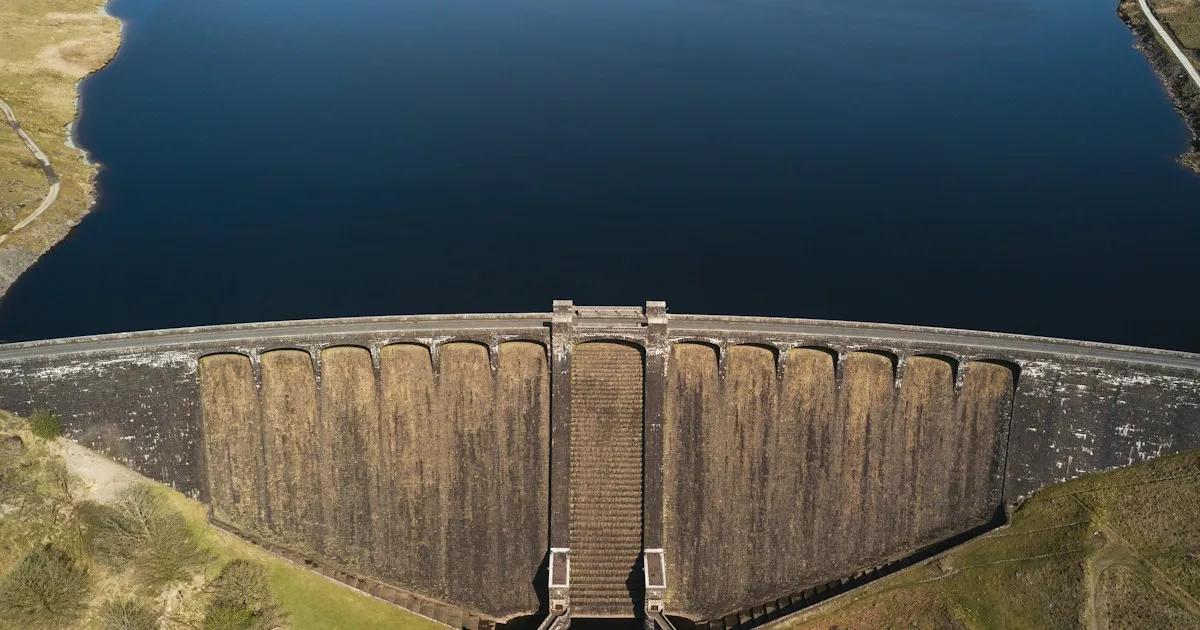
I'm sure that you'd be extra motivated if you're living in one of these places where you see a reservoir so low because of the water not coming with the lack of rain. You're like, oh yeah, a reservoir is actually full. So yeah, I love that. So you have this endless opportunity fund, and then you just look for opportunities. So yes, investments inherently have risk, but we're looking for opportunities to grow our money for retirement, for independence, whatever our long-term goal is. I want to throw another idea at you because I talk about this kind of automation system in a different way, and I talk about how if you have money coming in, and I kind of went from like it hits your checking account and then it goes over instead of hitting your reservoir and going over to your checking. So I do like this refresh. By talking about how you can keep like, you you're building your emergency fund until you get to a certain amount. And then you turn on the investment valve, I guess, and it starts, you know, going into the investment of your choice. And then when you have an emergency, you just turn off that valve again until your emergency refills. What are your thoughts on that framework? How would you describe it in a different way?
Kim Butler
What do you think? I think it's beautiful. And the only shift that I would make, and you use these words earlier, we flipped the flow a little bit. You're doing earned income, checking account, savings slash investing. I'm saying do earned income, reservoir for savings slash investing, and then income. So that idea of turning it on and off is beautiful. You can absolutely do that. If you think about our whole lives, we've got inflows and outflows. Those are obvious. But what we don't think about are capital flows. And that's what you're calling investing as a verb, right? The act of moving money to an investment, which is a noun. And yes, I was an English major growing up. So when we get into the habit of doing automated and active, like proactive movements of money to whatever it is that we deem as opportunities, which the landscape is really, really large, that's the important point. We want to have it motivated. And we've all heard that you're supposed to pay yourself first. You're supposed to save first, right? All I'm doing is helping you do that instead of what is most common, which is we spend first and then we save or invest.
Shaun Morgan
It's almost like the traditional pay yourself first is like it goes into your checking account and you're paying yourself your savings first. It's been the way you're doing It goes into your savings account and you're paying yourself your spending first. I like that idea of, okay, I'm paying myself to go spend instead of I'm paying myself to go save, which is the same thing really in the end, but the mindset shift can really help you if you're like, oh, I get to spend this money instead of I don't get to spend that money. I don't know. This isn't much for different people.
Kim Butler
Yep. All right.
Shaun Morgan
So I'm basing a lot of this off of a PDF, which is available. I'll put a link to this PDF that Kim has provided in the show notes, teachermoneyshow.com slash podcast. You'll be able to find the show notes there for all the shows for my show, or you can go to your description in the podcast player of your choice, and you'll find a direct link to this particular show's notes. And there's, there's a link to this, this PDF that you can find, but the PDF, you know, goes through these, these steps and it makes the, the, the claim that you can save about 25. percent of your income automatically doing this, which is incredible. I'm just wondering, like, at what point is it no longer just like automatically, you can just do it without thinking? Like, do you have to be intentionally more frugal in this process? And does frugality play any role in your framework, especially considering teachers, which are traditionally underpaid professionals compared to same level of education professionals?
Kim Butler
Yes, very true. So in the arena of frugality, it is all about choice. And there are some families that absolutely want to play that game because of their value system in being uber serious about building other assets or going on a major trip or getting out of their job or retiring or whatever is important to them. See, I think our society. has unfortunately fallen into just a default mode of be frugal today, save for retirement 30 years from now. Okay. That's the financial planning mantra, really, if you think about it. And sure, that's okay for somebody, but there's a couple of things that are at play in our world today that really make that horribly ineffective. The first thing is that we're going to live an incredibly long time. You look a little bit younger than I am. I would bet you potentially have another 80, 90 years of life. I mean, the age of 110, 120, which means I have another 50 years to go to get 110. That's a long, long, long time. And the old theory of we used to be able to work for 30 years and then retire and not work. It was only like for 10 or 20 years and it kind of worked. But if you look around at your parents, if I look at my parents who are in their eighties, they are still healthy and they live their best life if they continue to serve. Now I'm not talking 60 hour weeks, you know, in the classroom constantly, et cetera, but continuing to serve is such an important space. So I'll get off my bandwagon around that, but the reason that I covered it is actually if you do the math, age 65, which was put forth into our society in the, I think, 1930s, give or take, if you marched that forward with longevity and life expectancy today, it would be age 87. So I'm not saying that people have to work until they're 87, but I really want people to step back and think about what are we saving our money for? Like, yes, do your 403B plan. That's awesome. You get a match, have at it, but maybe don't. Don't go whole hog because building up that opportunity fund that is free and available and not locked up until you're 59 and a half, but could be used to make a major pivot for your family. It could be used to take advantage of an incredible opportunity in real estate. It could be used to take an opportunity that might come along for one of your children that is not in the norm that you need a little bit of extra money for. If all of your money is focused on retirement, whether it's literally locked up in a 403B or it's in a long-term investment, it's very difficult to take advantage of those opportunities. And so I just want people to stop and think for a minute, what is important to me? What is important to you? And then please have a discussion with your spouse if there's that in your family or significant other or whoever else you're making decisions with so that maybe there's a his and a hers, right? And there's two opportunity funds that were made. But this is a really important distinction and not just be in default mode.
Shaun Morgan
I really like that you said this. So this is something that I have been working on lately in my own brain. Because I was like, okay, I haven't maxed out my 403B. That's like, max it out is the thing that a lot of people talk about. And I took a step back and I looked and my 403B, which is the way the place I work for works, is we don't have a pension. We just do the 403B, which is unusual for education, but that's what we're doing. And so I have a match and we, between my contribution and my school's contribution, it's 13% of my income is going into the 403B, which is not even half of what could go into the 403B. But when I ran the numbers, I'm like, I'm going to have plenty at age 60 or 59 and a half, whatever the retirement. Maybe it's going to be at that point. I don't need to put even more in there. So I love this point of just make sure that you're not doing it just because somebody said you should do that. So I'm not going to add a single extra dollar to my 403B contribution. I'm instead pivoting more towards more self-directed options. So that way I have that flexibility. I would like to be able to leave employment. Before age 59 and a half so I could pursue something else. And that's going to be what's going to be available to me if I'm investing elsewhere, if I'm looking for opportunities elsewhere. So I think that's a really key point. A lot of the traditional retirement financial advice is given to us by traditional retirement financial advising companies, which as anyone who listens to this show are not my favorite people in the world. So So just keep that in mind that, you know, just because it's the traditional advice doesn't mean it's necessarily the correct one. And I listen to, you know, plenty of personal finance podcasts, and one of them talks a lot about the middle class trap, which is you have a home with a lot of equity, you have retirement accounts that are huge balances, and you have no ability to leave your job or walk away or anything like that because you don't have the flexibility. So flexibility is huge. And having the opportunity fund and investing in things that are going to allow you to be flexible, it is a big part of that. I love that you made that point. Okay, so just wrapping this up, I just got two more questions for you. It's a question to ask all of my guests. So unless there's something else you'd like to talk about with this four-step flow, do you have any other points you want to make?
Kim Butler
Well, remember that we have to talk about the joy, and you go ahead with your other two questions. I can't wait to hear them.
Shaun Morgan
Okay, I can't wait for the joy piece, but... My first question is, what's your number one tip for teachers to have a richer wallet, classroom, and life?
Kim Butler
Stop putting your earned income into your paycheck. It is that simple. And to back up the 25% of savings, which is kind of a round number, in the month of July, I don't have, so we're recording this in August, I don't have August's numbers yet. But the average percent of income that was saved from the thousands of people that are on our app, so we do have an app plus an account for that reservoir, you can do it on your own. And for those that are getting help, it was 23.8. 23.8% of income saved. And that doesn't happen in month one, but it typically ramps up shockingly fast for people.
Shaun Morgan
I love that. Yeah. Start putting money in the reservoir and you'll be able to get that number of savings super high because 15% is what that traditional wisdom is for saving. 25% is going to allow you to have a lot of flexibility if you invest it correctly. love that. Okay. And then my last question is, if the teachers loved your advice here, loved your steps, how can they connect with you to ask you any questions?
Kim Butler
The best place is prosperitythinkers.com. And I do really encourage people to go to either your link or my link that we've provided also that is special for your listeners. They'll get that PDF because it will elaborate a little bit more on what we've talked about today. Okay. And as stated, you absolutely can do this on your own. And if you want help, prosperitythinkers.com will get you to me and my team and you will get just an additional boost. Because somebody's on your side and helping you answer some of those other questions, like, should I prepay my mortgage? What should I do about this life insurance thing that I've heard, cetera, et cetera, et cetera.
Shaun Morgan
All right. Awesome. Thank you so much, Kim. Now, I'm dying to know, why is it a joy to come on the show today?
Kim Butler
My mom taught kindergarten two classes a day for over 30 years. She was instrumental in the Corvallis, Oregon school district. In getting all of the kindergarten rooms to have their counters low, the sinks low, like all the bulletin boards go down lower so that all those kindergarten kids could get all that good out and about. And I just saw her pour into these kids over and over and over and over and over again. My dad was an elementary school principal. In fact, he was my principal from fourth and fifth. Great. That's always an interesting environment. And so our entire lives were around school and teaching, et cetera. Now, of course, growing up, you never want to do what your parents do, right? So I'm thinking in my head, well, I don't want to teach. And in actuality, when I look back on my career, I've spent my entire career teaching. It's just directly in the personal finance space. And I'm very, very grateful. Literally, when the internet came online in the late 1990s, I figured that out. And I figured out basically Zoom, right? It was a different company. But the precursor to that, we didn't have cameras, but we could do screen share. And so I've helped people nationwide with their personal finances for my entire career. And it is a joy to do.
Shaun Morgan
Love it. Teaching is a joy. That's why I always say that as a teacher, you're already rich. Your wallet just needs to catch up because we have the richness of our life already there. If we're, you know, willing to see it in the profession we've chosen, we just need to figure out the money piece. That way we can really, you know, reap the wealth of that. Kim, thank you so much for coming on the show. This has been a ton of fun.
Kim Butler
You are welcome. Thank you.
Shaun Morgan
Wow, that was a ton of fun. I love the mindset shift of this episode because it's not anything different than we've said before, but just the flow, like she said, the flow is a little different. So with that being said, here are my top takeaways from this episode. Number one, build a reservoir. Put your paycheck directly into that reservoir savings account before you do anything else. Number two, automation. Automate your spending account so that way you put money in there and you have those base bills covered automatically without having all of your money in your spending account. Number three, be prepared to handle emergencies by pulling money out of that reservoir into your spending account on an as needed basis and not. Number four, look for opportunities. Once you have that emergency fund built, then you can keep building. And now you have space to invest in whatever way you deem fit. And we've talked a lot about investing last season. So if you're looking for ways to invest, you can go back there and check that out. Number five, I love how you're talking about frugality being about choice. You're choosing to do that to accelerate your timeline. But it's not about just living frugally so that way you can retire at 65 and then have potentially another 60 years to live. It's about just having that choice of building your wealth regardless. And then if you want to be more frugal to try and accelerate that, that is okay. I personally believe in frugality. And we're going to talk, of course, a lot about frugality in this season. I think that frugality as a mindset is really important because it helps you be more. I do like her point about if you're trying to be frugal just to get to retirement, keep in mind that longevity because my next top tip is that number six, retirement is about continuing to serve. You want to be able to continue to work. If you're doing good things and adding value to the world, it's very likely that you're going to continue to earn money even after you reach this retirement age. And if not, if you're just going to volunteer, you can have that wealth base. But just this idea of can continue to serve, continue to do things because you want to in retirement and because you're healthy and have that longevity ahead of you. I think that's beautiful. And then my seventh tip is retirement age is more like 87. I thought that that blew my mind that like just because of how long people are living after retirement age, you know, back in the 30s, 65 is old, right? You've worked till 65, you're tired and people would die in the next 10 years usually. Now you're, you know, working to 65 and then living to, you know, 80, 90, 100, 110, right? You've got to have a different mindset about retirement when traditional retirement age is more like 87 versus that 65. So that's really, you know, it just, so I just found that really interesting. And I think that we can keep that in mind as we are making our goals, our flexible goals. So that way we are able to do whatever we want with our money and not just be stuck waiting for that 65 time. So we can then shift into our next moment of service, our next act, because there is a lot of time to act. And remember that however you plan on getting there, as a teacher, you are already rich. Your wallet just needs to catch up.