

Listen to the Podcast:
In this episode, I talk with Karl Fisch, author of the TL;DR pension systems books, about how you can maximize and best use your pension.
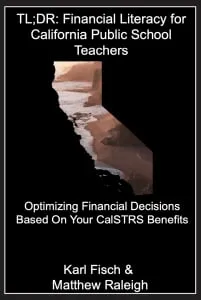
Most generic financial advice isn’t geared toward teachers in one crucial way--they don’t talk about your pension. The big problems are that fewer and fewer people have a pension every year, they are complex, and they vary from state to state, so it doesn’t make sense to talk about them. That’s why I brought on Karl Fisch. Karl is the author of the TL;DR pension systems series (currently 33 books/states and counting) that help YOU understand your pension; not only how your pension works but how to think about your pension in your larger financial picture. That’s what we talk about today in this episode.
Key Ideas
Unlike most investments, pensions are guaranteed income for life. You will never run out (unless the pension becomes defunct, which means there are some major problems!).
You have control over your pension by maximizing your salary and buying years of service (the earlier the better for both of these!).
Even the cost of schooling doesn’t offset the benefits of moving along the salary schedule because you get the higher salary now AND in retirement as a benefit for going back to school.
The pension is part of a larger financial strategy. For example, investing half of every raise you get will allow you to take advantage of compound interest without really feeling the effect of setting aside money to invest.
Show Notes
Karl's blog post on salary schedules
TL;DR books (scroll down to find your state)
403bwise.org episode with Dan Otter
Karl's blog post Financial Literacy in One Sentence
Twitter (X), Bluesky, FB @Karl Fisch
Another episode with a TL;DR co-author; taking advantage of dual incomes
Transcript
Shaun Morgan
Welcome to the Teacher Money Show. The podcast dedicated to helping teachers navigate your unique financial challenges and unlock your financial superpowers. I'm your host, Shaun Morgan, a full-time teacher. That's right. I teach every day just like you and personal financial coach, and I'm here to help every teacher, whether you're a seasoned teacher looking for fresh insights or a new educator navigating your first paycheck to have a richer wallet, classroom, and life.
Shaun Morgan
I'm super excited to have Karl Fish on the show today. If you haven't heard that name before, he is someone who's been around the block a few times when it comes to finance for teachers. He taught mathematics and computer science for over 30 years, and he's starting to start He served as a director of for Oracle High School in Littleton, Colorado, then he is serving on a benefits committee negotiations and became the person that people asked about financial questions in his school. You might be that person in your school. So, through that he started to learn and ended up serving on the Colorado Pera Board of Trustees, which is the public employee pension system in Colorado. And now he's retired, but he's still in the personal finance literacy for educators space with blog and with doing books on the different pension systems of states around the United States and a few city pension plans as well. So, if you want to know anything about pensions and and educators with their money, Karl is the guy to talk to and I'm super excited to have a month show today. Karl welcome to the show.
Karl Fisch
Hey, thanks for having me. I don't know if I can live up to that introduction, but I'll do my best.
Shaun Morgan
I'm sure that you will. I'm sure that you will. And, you know, diving right into that, you are the mind and the author behind the series TLDR on pension plans. And let's all be honest, we didn't read our pension plans when we signed up. What inspired you to write those books?
Karl Fisch
Well, maybe just a little back story. When I was in high school, I had a part-time job with a credit union, kind of got me interested in finances a little bit, ended up becoming a teacher of mathematics. And so, you know, had an interest in numbers and stuff, so kind of got interested in finance. Back in the 1990s, that meant, you know, reading magazines for the younger folks out there. money for. And books, particularly some books by a guy named John Bogle, they're already called Jack, but learned some from that. then as we moved into the, you know, 2000s that changed to books and blogs and podcasts and all sorts of good stuff. As you mentioned, the intro ended up serving on benefits committee for my district and negotiations little bit. And so learned a little bit more about stuff there, about how it worked within our school district. And then just because as part of that had conversations with my colleagues, I figured out that there was a lot of financial knowledge that at that point, I thought was, you know, more or less common sense, you know, not that that people thought about it maybe as much as I did, but that it wasn't like any, any, any weird things that were out there that people wouldn't know. And after talking to my colleagues, it turned out that that whether it's common sense or not, they didn't know it. And as a result we're often making or, or more often not making financial decisions. And the ones they were make were aren't particularly optimal for them or in their best interests, often with the quote unquote advice of people who maybe weren't looking out for their best interests. So I started informally helping folks in my building. As you mentioned, I ended up serving three years on the pera board of trustees until I retired, so I had to step down from that seat. And so when I did retire, I saw this huge need, also for our students by the way, as a whole separate topic.
Karl Fisch
So I still kind of worked with my educator friends, not financial advice. I'm not definitely not a financial advisor, but I think of it myself as a financial educator. I was trying to just help them learn more about their finances, kind of give them ideas about you some things they should think about, and I certainly had opinions about what they should do, but just try to lay it out so they can make their own decisions. And then that spread beyond I'm just people I knew and word of mouth that kind of stuff. And so I was feeling good about that, I felt like I was helping some people really hard to scale that. There's one of me. And so I thought, well, maybe I can write a little book that would sum that up and more people could get that that I wouldn't necessarily have to talk with everybody. But I also knew that my audience was people who typically wouldn't read a financial book. That's kind of why they're in this position. So it kind of came up with that idea of the TLDR, if I could write something short enough and straightforward enough that people who really weren't interested in this would read it. I would do that. So I wrote the Colorado book, got a decent reception from the tens and tens of people who bought it in Colorado. And then I on the Teach and Retire Rich podcast and they said without warning me that, hey, you should write one of these for all 50 states. And I said, well, that'd be a great idea, but I don't feel like I know enough about the all 50 states as it will. just get a co-author from each state. So that actually sounded like a pretty good idea. So we're now on book 33 that I'm working on. Or actually book 34. got 33 out working on Connecticut at the moment.
Shaun Morgan
We're going to talk mostly about pensions, but is there a reason why Connecticut's number 34 instead of higher up on the list?
Karl Fisch
It's truly based on co-authors that step forward. So it had nothing to do. It's not like I went through and said, let's do the biggest states first or whatever. It's truly like, hey, somebody from Connecticut's wanting to help me out, then I'll do it. And so for the states, we haven't done, it's not anything holding anything against those states, just looking for local co-authors who know that pension, know how schools work in the state, know how taxes work in that state, because I can do all the reading and I do. When I write these books, I do all the research, I write the draft. But then I can run it through my co-author to make sure I don't really screw something up that is obvious to people living there, but for somebody living in Colorado wouldn't know. So if any of your listeners look at the list of books and say, hey, we don't have one for my state and want to be a co-author, reach out to me. That's all it takes. And it's not, it's not a huge time commitment on their part, probably depends how much they get into it, but could be as short as eight to ten hours of work could be longer. And then we can, you know, hopefully at some point reach the goal that the teacher retire rich podcast guys thought we should do, which is all 50 states, which is actually more than 50 states because there are a few city pension plans as well.
Shaun Morgan
So that's awesome. Well, I wish you best of luck on that. And hopefully we'll get some more people to reach out and co-author with you. All right. All right. you wrote this, you know, series of books to help people understand their pension. That's really what it is because pension is huge. And that's obviously important part of an educator's finances. So, how are pensions different than other traditional retirement options? what I mean by that is, how should we think about it, if the impact is going to have on the way that we're approaching our retirement and our financial decision making compared with those options?
Karl Fisch
Right, so the books really are, you know, they're titled personal financially, personal financial literacy for educators, and then specifically then references their pension system. So, it is more than just about the pension system, but it's trying to bring it together kind of holistically, but one of the things that I discovered through this, my journey of getting, however I got here, was that, you know, we live in a great age in the sense of, there is a ton of fantastic financial advice that you can get for free, right? Online through books, some also not so great financial advice, you can get those places, for the most part, really accessible, it's never been easier to learn this stuff. The problem, or maybe the challenge, is that for so much of it, it's geared towards people who don't have a pension, and because, you know, speaking, we're a minority out there.
Karl Fisch
There's not, you know, a lot of people aren't, don't receive pensions anymore, and so the old idea of the three-legged stool of pensions, Social Security, and your personal savings, for most people is now 401k, and Social Security, it's kind of a two-legged stool, and so for those little pensions, they often aren't mentioned, it's kind of like a throwaway line, you'll be listening to podcasts or reading a blog post, and they'll say, oh, and, you know, I'll go through this whole thing, and then they'll say, oh, if you have a pension, you might want to do something little differently, and then they just move on, right? They don't say what you should do differently, because that's not really their target audience, right? Especially because a lot of these folks are writing for, you know, folks a little more higher net worth than a lot of educators have, and so it's It's a really different, it really should change people's entire approach, not only to retirement, but for their finances throughout their life. Because it's, it's guaranteed income for life, which Social Security is as well, often with the cost of living in Greece, it depends on your pension plan. But it starts typically, starts so much earlier than Social Security, right? know, full retirement age these days is 67 for folks who can, if for Social Security folks can afford to, you should wait till 70 often to do that. And the barrier unless you can get is 62. But for a lot of educators in the primary, their careers right now, they can retire easily, well, easily in the sense of their pension in their late 50s. And, and even though retirement benefits for newer hires are often not quite as good, still can often do it by your late 50s or early 60s much earlier than Social Security.
Karl Fisch
So there's a, a whole different set of opportunities and changes. challenges for educators because, you know, typical social security person, you're already on Medicare, right? need that. So health insurance, while not cheap when you're on Medicare, is a lot less expensive. You also have fewer years, not to be morbid, but fewer years between retiring and dying that you have to worry about, whereas folks who are retiring younger have those gap years before they get social security, as well as there are a lot of pension systems that we don't like in Colorado. We don't pay into social security. So, we don't get social security, except those have enough credit, of like working in high school and college that we might get some, although reduced by weapon GPO. And so, there's just so many things that are different about how you should approach that. Just one example, again, a lot of, not all, but a lot of pension plans allow you to purchase additional service credit. So, the typical way of earning service credit is, right, you teach a year, or you work in some other educational capacity for a year, and you get a year of service credit, and that adds up in the Eventually, that's how you're pension. But often you can purchase additional service credit.
Karl Fisch
Sometimes it can just be, you can purchase a couple of years just for no reason. times you have to have, you know, work history and or social security job to qualify or maybe teaching out of state or something like that. But that's a huge option because like in the private sector, again, back to folks on Social Security, one of the, you know, big topics of conversation out there and the financial blogosphere, you will, is this idea of, okay, they retire and they have this big 401K, hopefully big 401K and IRA. How do they turn that into annuity, right? How do they turn that into yearly income that's gonna allow, you know, provide for their needs but also last their entire life? Well, your pension is an annuity. And if you buy years, you're actually purchasing an additional annuity. But the difference is when people in the private sector are purchasing annuity, they're purchasing from insurance company that has to make money off of them. When you buy it from your pension plan, They don't have to make money off you, so you're basically buying an annuity at cost. We have what all those people in the private sector would love to have, and then there's all sorts of stuff around optimizing their highest average salary. That's what we call it Different people call it final average salary or lots of different things. Things around salary schedule, things around asset allocation, but also just being aware of the details of their pension because while pensions have a lot in common, again written in 33 books so far, they have a lot in common, but each one is also very specific and has different details and people are just shocked when they find out, wait, pension doesn't do that? No. You really need to understand your pension, just pensions in general.
Shaun Morgan
Yeah, pensions are tricky. They're sticky businesses. I've been a part of two and a half pensions, and each one is different, and within each pension there's different tiers and levels, so there's a lot to figure out, and it's just That's too long you didn't read it, right?
Karl Fisch
I thought somebody needs to write a book.
Shaun Morgan
Yeah, someone. And if you're in one of those states, make sure you reach out to And I love how you talked about this need in this space for understanding pensions. Because this is one of my top reasons for starting this podcast is I listen to financial education podcasts all the time and I go, that's great. But it doesn't apply to me because I'm a teacher, right? It's just there's so many things about teaching that don't fit in with the now traditional mold of preparing for retirement. Because we don't have the 401k that most people do. have 403b, but that's different. You got to be careful with the 403b. We may or may not have Social Security on this and that you're in. Or you'll have Social Security and your pension, but also some weird rules like you were talking about that you need to be aware of. Because if you're expecting to get both in their full amount. And then you don't, that can be a problem.
Shaun Morgan
People don't talk about those on podcasts where they aren't talking about pensions. there are so many different little rules to be aware of when you have a pension. then my last favorite thing, when I read the book that the teaching retire rich book, that they put out of that day on the author wrote. And my favorite part of that book is where it talked about how our pension is in annuity. So the fact that all these people are coming in and trying to sell us an annuity in our 403 B is nonsensical because we don't have one. We don't need an additional insurance annuity on top of that.
Karl Fisch
Or if you do want annuity, look at purchasing service credit. Because again, you're buying it at cost. You're not paying those insane fees that the 403 B companies are charging you. And just as an example, again, this depends, varies on your pension system. But in Colorado, currently our pension hasn't to return of seven and a quarter percent, which means there's a lot of factors that go into figuring out how much it costs by service credit, but that's a big part of it. In effect, this is simplifying a little bit, but in effect, when you're by nine years in Colorado, you're guaranteeing yourself a seven and a quarter percent return for the rest of your life, right? Now, yes, conceivably, you could invest into your own and make more than that, but I don't know any financial, like a real financial advisor, not me, any real financial advisor who'd said, here's a guaranteed investment that'll pay you seven and a quarter percent until you die. Are you going to turn that down? No way, right?
Karl Fisch
But people don't think about that way. And so, again, it's a totally different mindset and totally different considerations that even, unfortunately, many financial advisors aren't aware of because, again, they don't work with a lot of folks with pension.
Shaun Morgan
Well, yeah, like what you're saying, the problem is the population is so small with pensions that that's just not where the money is. or advising that's not where people are making money in their content creation because we don't have a ton of people with the pension, it's important.
Karl Fisch
You're not making money with your content creation, Shaun. I thought I was looking at your mansion behind you.
Shaun Morgan
So, you know, yes, yes, for all of you, my wonderful home office that's also where I teach my classroom from this is very high tech and nice.
Karl Fisch
Very swanky.
Shaun Morgan
Yeah, you know, the Lamborghini is outside, right?
Karl Fisch
Yes, that's good. We'll take a look at it later.
Shaun Morgan
So, you know, just speaking of my language right now, I think this is fantastic. So we have these pensions and we want to make sure that we are not just being like, oh, pension, I guess it'll be there, but we want to make sure we are maximizing that and using it to the full effect. So, you know, we have these just service and education level and the stipend levels and all these different like, you know, are you teaching me? after not to go into how much money you're getting every single year for your for your salary. How does that impact your pension? What should you think about when you're working on maximizing the salary schedule? You just talked to us about those lanes and steps and all those things that go into maximizing our pension.
Karl Fisch
So believe it or not there's a blog post for that. So if I don't know if you put links with your with your podcast but I can send that along if you want it. But yeah so one of the things so in addition to helping folks trying to understand their finances and this little book project I also teach a personal financial literacy class for Colorado educators for the same reason trying to reach more folks. It's an online platform and you can do it on their own time although we try to keep it relatively synchronous in terms of the same topics but they can work on it. whatever time the day they want, it's not face to face and so one of the things we talk about is seller schedules right which is something that not every school district has by the way but most do or at least most that I've come across do and fairly typical thing that happens is when a new teacher starts the veteran teacher pulls them aside and says you want to move across that seller schedule as fast as you possibly can right that standard advice it was told to me when I started I told the new folks when they started I'm sure still told the new folks today.
Karl Fisch
I certainly mention it in the class but in the books but you know again somebody who's first starting teaching whether they're 22 23 right out of school or they're teaching their second career when they first start teaching that's it's not necessarily you know retirement is not at the the top of their mind I would argue that you shouldn't be maybe at the top of their mind, but it should be at least a portion of their mind. But one of the things that I struggled with is everybody told that, but a lot of people don't actually do that. Or at least they don't do it very quickly and towards the end of their career, say, why didn't I do that? And so instead of just telling, I wondered if there was a way I could show them, right? And so that led to that blog post, which is basically, it's a spread. I mean, it's a narrative and then it links to a spreadsheet that took a salary schedule from a typical school district here in Colorado. It's not one of the highest paying school districts. It's not one of the lowest paying school districts. It's kind of in the middle. And it literally takes their salary schedule and then looks at three different things. First, it looks at your cumulative salary over how many every year, career you want to have. And so as you know, in most salary schedules, you get a raise. each year as you go up a step, and you get a raise as if you move horizontally through additional education. And so what it does is it sums up the columns for all the different lanes of education. So you see the difference between, well, if you spent your entire career in the bachelors lane, this is how much you would make over a 30-year career or whatever number you want to put in. It's got all the years. You can stop at wherever you want. But if you can make it to MA plus 60 or whatever your highest one is in your district, this is what it is.
Karl Fisch
Now in reality, very few of any teachers, unless they start in the highest lane, aren't going to stay in the same lane their whole career. But definitely some teachers only move over a little bit versus teachers who move over a lot and quickly, as well as there's typically, in most districts, a hard break between bachelors plus whatever and masters. And if you don't get your masters, then you stop. And so there's one spreadsheet that looks at the cumulative totals that show was how much more you make by moving on over on the salary schedule. Then there's a second piece of that because your pension is typically based again on some formula where the highest average salary or final average salary comes into play. so by moving over on the salary schedule, if you max it out by the end, you're making more. And so it also means that now only did you make literally hundreds of thousands, sometimes even over million dollars more in your career by moving over. But your pension might be $30,000 more a year for the rest of your life because you moved over. And then the third piece of it because this came up a lot in the class is one of the strategies that we talk about is teacher say, well, it's hard to have extra money set aside to invest. And we talk a lot about spending and a lot of other things, but one of the things as well there's a technique that a lot of people use, which is invest half your raises, right? As teachers, you know, one advantage we have. have, which some people may not see as an advantage, but we kind of know what our salaries are going to look like, right? have a salary schedule, we know next year what we're going to make, plus a small cost of living adjustment to the salary schedule itself, plus if we move over, we can see that number.
Karl Fisch
So if you're going to make $1,500 more next year, commit to, okay, yourself to spend 750 more next year, but then invest the other half, invest 750. So again, with this typical Colorado school district, I did that. I simply went through and said, what if you invest half your raise and they get this spreadsheet? So it calculates it all for you. And again, the cumulative amount that you would have at the end of a, let's say 30-year career, again, you can pick whatever number you want is really kind of amazing. And then the differential between what that looks like if you stayed in bachelor's or bachelor's plus 15 or bachelor's plus 30, versus if you're over here in MA plus 60, is again, come on. I guess. So part of the blog post title is your million dollar or two or three decision, because it really is between those three things, it could easily be several million dollars difference over the course of your career by something that most people intuitively know, but seeing it is like, oh my goodness.
Shaun Morgan
Yeah, I think that's so important that we're putting hard values to it's not just like, oh, I'm going to make an extra thousand dollars next year if I move over, Which if you look at it is like, a few, you know, a few dozen dollars at each paycheck, you're like, you know, like it's really not that exciting in that moment, but intuitively, if you keep just in your moving up and you keep popping over, you know, that huge impact over the course of your career, but then I, you know, something that even I hadn't thought of is the fact that you've moved over so much can make your pension sell. much bigger because they're looking only at your final like three to five years of salary, not at your career. That makes a huge impact. You are late in your career and you're like, you know, why would I go and get education? I'm almost done. not going to make it back. If you are, you know, more than five years out from retiring, hopping over those last couple of lanes can make a huge difference over your your long-term pension because you have that this final three to five years average going up so much.
Karl Fisch
Well, and the other thing I think this post and the spreadsheet shows is again, the power of compound interest or the invest half your raises thing. Like you said, some of you went, well, thousand dollars. Sure, I'd like to have another thousand dollars next year, but it's only a thousand. It's not that much. But when you look at, okay, invest 500 of it and then keep doing half of your raise each year, then wow, I'm going to retire with a million dollars and Again, it demonstrates visually the impact of that compound interest that people just don't. mean, humans are linear thinkers, right? We aren't exponential thinkers. And so it's really tough for us to really understand that. And just I want to mention too that spreadsheet that's out there, they can make a copy of it and put in their own salary schedule, right? That's what it says in the blog post. Do you file, make a copy? a Google spreadsheet. And then just replace the salary schedule that's there with yours. And then it'll automatically calculate the rest for you. You know, you might have to change the formula for your pension as well on the pension tab, because obviously mine is for Colorado's pension and your formula might be little bit different. But that's relatively easy to do. And I'm happy to help anybody who wants to do that. But for the just straight, how much more will you make cumulatively? Just plug in your own salary schedule. And again, it's all in today's dollars. don't have to worry about, well, what's the salary schedule going to be like in 25 years? The way the spreadsheet is designed, it's all in today's dollars. You put in an exam. exactly today's salary schedule, because we know that inflation is going to happen, and salaries are going to be inflated, but then what they buy, what you're going to buy with that money also inflates. So by keeping in today's dollars, we can really, the numbers there are all relatively close to today's purchasing power, assuming, which is a little bit of an assumption, but assuming that teacher's salary schedule is generally keep up with inflation over time. So everything stays in today's dollars, it's not like you're saying, oh, I'm going to have a million dollars, but it's only going to buy me 250,000. No, that's a million dollars in today's dollars.
Shaun Morgan
Yeah, that's a really good point. And just for anyone who wants to access that, I will have a link to this blog post in our show, can go to teachermoneyshow.com/podcast to find that, and it will have the links to all the show notes there for.
Karl Fisch
And again, I want to be clear, there's nothing like amazing a blog post or some secret I've discovered. Um, and, you know, it's a secret that a lot of people know it's not really a secret, but again, it was just trying a way to visually show people in a way that would hit them who weren't spreadsheet people, right, who aren't, who don't understand compound interest or just maybe they understand it, but it's like, yeah, you know, fine, but that's, I have less than plans to do for tomorrow, you know? And so this is a quick hit of like, oh, okay, well, next time I do have some time, I should sit down, figure out my salary schedule and how and how I can move across it quickly. I want to, again, as I think I say in the blog post, you know, it's not all about the money, right? There's more to life than money. And so there are trade offs and balances and balance you want to buy in your life, but most teachers are taking continuing education anyway to keep their certificate up in line, you know, up to date, most teachers are taking stuff to hopefully become better educators. And so, why not do that, and it just, again, gives them a little bit of a financial incentive, if you will, that shows them, oh, this is really worth it, not just, yeah, I'm sure it's worth it, but no, this is really worth it.
Shaun Morgan
Awesome. Yeah, thank you so much. You know, there's another thing that I was wondering about, you might not be able to speak to the city of having to research on it or anything, but, you know, when we are moving over that salary, schedule, it requires education, right? So, you know, pain per master's degree is usually not cheap. So, if you have to get student loans, does that negate the positive impacts you're getting from that, or how would that impact, you know, long-term thinking relies, you know, initially you say, yeah, I'm putting a lot of money into this, and this, you know, if I get student loans, it's just going to be interesting to pound that. You know, that's short-term, and so looking at that, but also the long-term.
Karl Fisch
That's a great question. So, I mean, there's multiple pieces that answer. There's always trade-offs, right? But the math does work out, and it works out the best the earlier you do it, right? So if you do it earlier in your career, then the math works out even better. It's later in your career. There does come a point where there may be diminishing returns from that. But one of the ways we talk about it in the class I teach is think of taking additional classes as your side hustle. And instead of getting paid for your side hustle now, you're actually paying for your side hustle, but you're getting paid for it later with through salary increases and getting paid even later through a vastly in larger pension. And so, yes, there is cost, and there are some ways to deal with. Some places, know, some school districts or schools have some tuition reimbursement things, those kind of things. course, there's tax breaks for it. You can use 529 dollars for it, or there's the lifetime learning credit. your income is not too high, that you can use I just lost some of it. You know, typically the big cost is a masters. Certainly there are some less expensive masters online that you can find that will help.
Karl Fisch
But one of the great things, well, potentially great things about student loans right now is the SAVE program. So currently tied up in the courts, right? So this is a program that the Biden administration put forward and actually put into effect. And then right now some folks are suing and we'll have to see how that plays out. And that'll depend someone on future elections as well. But if that stays in place, and for the people who are already in it, I can't imagine it will go away. I imagine there'll be legacy to into it. just new people might not be able to join it. But again, under the SAVE program, it can be really attractive, particularly for young educators where it's very possible that you could pay $20, $30 a month, even zero. for $10 a month for 10 years and have it forgiven. Again, there's a blog post for that. It's got a nice little spreadsheet that you can put in and people say, well, my payments would be higher than that, well, they could be. But typically, if you're a young teacher, you're not making a ton of money. And even if you have a spouse who's making a lot of money, part of the big change of the SAVE program was you could file your taxes separately and then it'll be just based on your own income, but you can still claim your kids if you have children. And it also does, I don't wanna get in the details, 225% of poverty level is an exclusion from your income. So when you do all the math, like I said, it often comes down to very low payments for 10 years and you can do some things to affect those payments like having insurance premiums come out pre-tax by contributing to FSAs and HSAs, by contributing to traditional pre-tax 401K, 403B, 457B, IRAs. That all lowers your taxable income, so you get tax breaks, but it also lowers your student loan payment. And if you're in PSLF after 10 years, it's gone, right? It's forgiven.
Karl Fisch
And so it is not inconceivable that there's a lot of people getting a master's right now that if essentially it will be free, other than the opportunity cost of the money they paid right now, you know, being invested somewhere, but that they may pay zero dollars or very little dollars and have it paid for it. So I'm hopeful that that the litigation will get resolved soon, but it is just a fantastic thing. I've been screaming from the mountaintops to everyone who has, who already has student loans. They should be in this program and they should understand how it works because there are ways to really minimize those student loan payments. Again, sometimes all the way down to zero.
Shaun Morgan
Awesome. So it could have a short term impact. You can negate that. short-term impact, but long-term, makes sense even if you don't negate that from impact. So that's, and again, it's, it's like any college education, right?
Karl Fisch
If you, if you go to a master's program that, I don't know if there is a master's in education program that, that costs this much, that costs $150,000, it's, it's a different calculation than if you're doing one that costs $30,000, or again, there's some online ones in, in Colorado that are, are fairly well recommended that around $10,000, you know, that, so they're the, know, just depending on what you want for yourself, as well as what's available to you and what works, you know, how much that cost is also going to be, you know, part of that calculation. But, you know, even for the, the moderately expensive master's, particularly if you do it young earlier in your career, it is definitely going to help.
Shaun Morgan
Yeah, you know, like I said, there are so many options. I, and I don't recommend this necessarily for everyone, but I got my master's degree for $4,000. Because I took an online program that you fit as many classes as possible and six months made a flat fee for that six months And I busted out a master's degree in six months. Yep, and it was Really hard, but I did it and I paid the one flat fee and I was done. had a master's degree.
Karl Fisch
And I know some folks in Colorado who've done that as well.
Shaun Morgan
So yeah, there are many ways to do it if you want to and get maximum benefit for the minimum money put into that So So we are we're coming up on our time here and I really enjoyed this conversation I just want to Can I start going we've talked about this a little bit, but if you have, you know, you're you're doing everything you can to make sure your pensions Maximized right you may or may not have social security depending on if you have You know in a state where you contribute and you have to consider of course those those exclusions that apply Uh, how would you think about your maximizing your pension while also working with the 403b, the 457 of the HSA as part of that total plan?
Karl Fisch
Yeah, I mean, we talked about salary schedules, a big part of that. Certainly it depends on how your state treats income for your salary, but in states where they count everything, in Colorado, if you coach a sport or sponsor an activity or take tickets at the soccer game, that all counts. So our working summer school or doing summer curriculum work that you get paid for, that all counts is pera-includable salary. So it impacts your highest average salary, which impacts your pension. So certainly if you have the time and the energy level during those last few years, take advantage of that. There are other decisions around like asset allocation, which again, we don't really have time to dive into tonight, but this is a simplification, but in a lot of ways for a career educator, you can think of your pension as the bond portion of your portfolio.
Karl Fisch
So that allows you as you'd be much more aggressive. by aggressive, I don't mean that you're buying GameStop, but that you're investing much more in equities, equity index funds, because unlike folks in the private sector, when you retire, not having to live off your 401k, or in our case, off in a 403b, or a 457b. But you have a pension coming in that is going to cover a lot of your basic living expenses. And then where the 403b, or the IRA, or the HSA comes in, is really going from, OK, I can get by in my pension. But if I want to kind of live the dream in retirement, and really live my best life, that's where that money comes in. And understanding asset allocation, and then understanding fees in 403b land, really, really important, which is what Teaching Retire Rich Dan and Scott do with 403b wise. They talk about that a lot. And again, educators just don't understand how bad the majority, not all, but the majority of their 403b's are and that they need to try to get the best one or do an IRA instead or if you're lucky enough to have a good 457 that or like in Colorado and a few other states we actually do have access to our state 401k.
Karl Fisch
So we actually have access to 401k's, 403b's and 457's but we have a state 401k and a state 457 so I don't need a 403b at all if I'm in a district that's opted into the 457, unfortunately not all every district has but we have fantastic low fees and so but people don't know that because the people who come to their lounge with free donuts is the 403b reps and so that's one of the most important and helpful parts of the class I teach but also one of the out how much money they've left on the table and actually not I left on the table, given to their 403B company, um, over time.
Shaun Morgan
Those, those three donuts were not free. It hurts my, it hurts my heart every time. And I could go just off, I have a rant that every time it comes up, I just like, just ran on it. But if you want to hear me rant about the three donuts, I've talked about this many times, one of them was on the episode with Dan Otter. Uh, you know, we had them on, talked all about 403B's with 403bwise.org. Once again, I'll link to that in show notes at teachermanyshow.com slash podcast. All right. Uh, I've got two more questions for you. Good questions. asked every guest. My first one is what is your number one tip for teachers to have a richer wallet, classroom and life?
Karl Fisch
I think I would go with being intentional. Um, you know, something we talk a lot about in, in, in the teaching world in terms of our teaching, right? But in terms of our finances, um, it's Really like aligning your spending with your values and goals. So we talk about spending a lot in the financial community, in my classes, the books, and stuff. It's not that spending itself is bad, right? Spending is part of life, but spending out of things that you don't value, that can be bad. And I have another blog post, which is a little tongue-in-cheek, but not really that says, you know, I can tell you how to be successful financial literacy in one sentence. You know, and the sentence is something I may get exactly right, because I spent whole lot of time making sure every word was the way I wanted it. But financial literacy is spending less than you make on the things that you value and saving investing the rest in low cost, diversified index funds, selected based on your investment time horizon, right? And there's a lot more detail behind that. But if you're intentional about that, really think about the life you want to live.
Karl Fisch
For so many of us, it was, you know, we went to school, we got our education we came out, we got a job, and life just happened. happen to us. And that's totally normal. But if we take a step back and be more intentional about well, what do I really value? What are my goals? Not just financially, but just for my life. And then aligning what I'm doing with that, being really intentional, taking the time to think about that instead of suddenly waking up and being 50 or 65 or whatever and saying, well, I wish I would have thought about that earlier. It's not rocket science. It's just taking a step back and really thinking about it a little bit. And the earlier you can do that, the much larger impact it will have on your life.
Shaun Morgan
Awesome. Thank you. That is fantastic advice. Intention is probably the most important thing in most aspects of our life. Instead of going around on autopilot, which I feel like the culture of today is just kind of living on autopilot.
Karl Fisch
Well, we all do it because autopilot is good for things we don't want to think about. Like if we paid, we paid a, I can't think of the right word, but if paid a hundred percent attention to everything, we'd just be overwhelmed, right? And so, so, you know, people use their intuition and, and they go with their gut feeling and there's good, good evolutionary reasons for that, not to get off on a totally another topic. But yeah, just being more intentional about the things that really matter is just huge.
Shaun Morgan
Well, you know, you have to be intentional about what you're intentional about too.
Karl Fisch
Right. Yeah, there you go. Wow, that's meta intentional.
Shaun Morgan
Oh, yes, very much so. Anyway, so I actually think that that's one of the most important things is to realize that where you're focusing and where you're putting your energy needs to be on purpose as much as possible. Yep. All right, and the last question, you know, if someone is just akin to right, a TLDR book about their state, or just want to get in contact with you, maybe get help with that spreadsheet, or for any other reason, how can a teacher get in contact with you.
Karl Fisch
Sure. I mean, one place, a one stop shop that can get to me is. is my blog, which is fischfinancial.org, and it's fish spelled F-I-S-C-H, financialonword.org. Then there's some contact things there. Places like Twitter and Blue Sky and Facebook. I'm Carl Fish, just all three places. My email is just Karl Fisch, and it's a Gmail account, so they can get all of me there. They can search me on Amazon if they really want to find the list four weeks. We'll be at 34 books, and I can send you that link, too, if you want to include in the show notes, but the point of this is not to sell books. As I tell my co-authors when they sign up, this is not going to make you independently wealthy. You're going to make tens and tens of dollars, because we make a buck or so each sale, if we sell tens, that's great. That's hopefully some of those lies we influence. We sell 20. That's great. Some books sell more. and the bigger states, and we reach more people, but again, it's not going to move you into another tax bracket anytime soon. So it's not about that. really is. They're very inexpensive. It's $5 per Kindle, $8 for paperback. If you have Kindle Unlimited, you can read it for free. And so it's really just designed to get the information out because it can really make such a huge difference, particularly for younger teachers. Certainly, it has a bigger impact. But no matter where you are in your career, it can make a big difference. my class, I've had somebody as young as 24, and somebody as old as 62, pretty universally, they're all saying, yeah, I got a lot out of this.
Shaun Morgan
Awesome. That is incredible. I'm so glad you have that resource available. And I hope that you get pens of sales.
Karl Fisch
All right, that'd be good. Well, I hope we get one or two authors. Hopefully, spread out not all tomorrow but and we'll work through it but if I get them all tomorrow that's great I'll just queue them up and we'll get to it as I can.
Shaun Morgan
Well thank you so much Karl for coming on the show it was a lot of fun talking to you and I appreciate it.
Karl Fisch
Well I appreciate what you're doing with this helping educate teachers about their finances.